
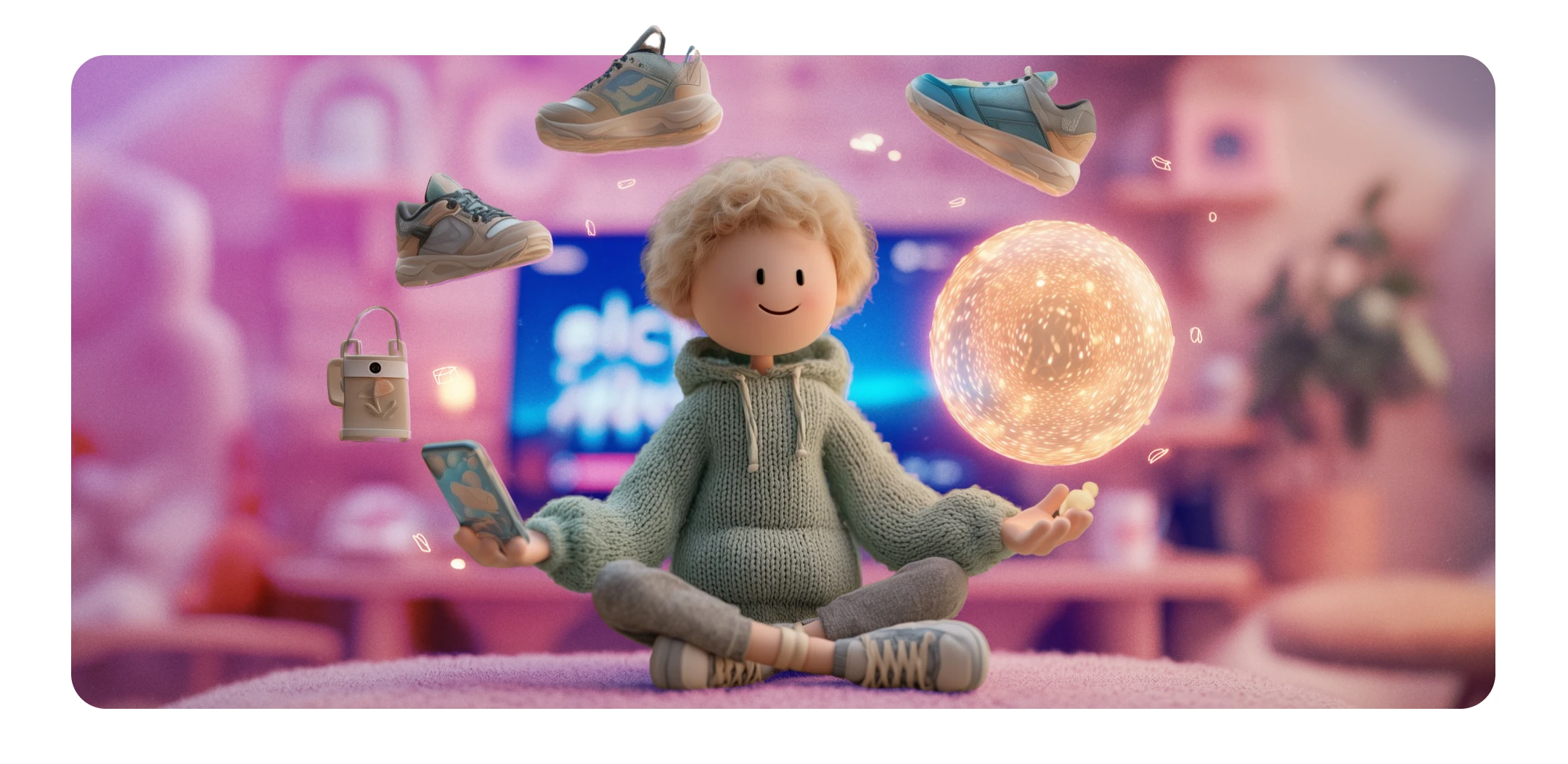
Industry leaders already see 2026 as a turning point, with nearly half of consumers using or planning to use AI to assist with shopping.
In addition to adoption, what stands out in this context is how behavior is evolving. Shoppers are asking more specific, contextual questions and expecting systems to understand both taste and intent. Assistants are beginning to surface products before a search is even made, and, in some cases, completing transactions themselves.
These changes raise a broader question for retail media. If discovery no longer begins on retailer sites or within search results, then the systems designed to capture demand at that moment start to lose their central role. That journey is expanding, fragmenting, and in many cases beginning elsewhere.
How AI is shifting retail media from intent capture to discovery creation
Retail media has historically focused on capturing demand at the point of purchase. Search queries, product pages, and checkout flows have been the primary surfaces where advertising performs, largely because intent is already established.
AI is making demand happen earlier. Products are now being surfaced in feeds and summaries before consumers have expressed a clear intent to buy. A recommendation might emerge from a prompt about planning a trip, buying a gift, redecorating a room, or finding a new hobby.
As a result, the traditional “search → click → buy” journey is now less linear than ever. Intent still matters, of course, but it’s increasingly shaped upstream by the environments where consumers spend time and gather inspiration.
Retail media, in its current form, was simply not built for that phase of the journey.
Where retail media is expanding beyond the retailer
As discovery shifts in these ways, so does the surface area where retail media needs to operate. Today, consumers increasingly encounter products while watching streaming content, reading blogs, scrolling through social feeds, or engaging with creators. These environments are where interest forms, even if transactions are expected to happen elsewhere.
This creates a gap in which inspiration happens in one place and commerce is pushed into another. Early attempts to bridge this gap (like QR codes) introduced ways to connect the two, but they have struggled to create meaningful engagement.
In practice, these “solutions” have tended to:
- Ask users to step out of the experience they are enjoying
- Treat commerce as a separate layer rather than part of the content
- Rely on the user to connect inspiration to action themselves
The underlying issue here is context. When commerce sits adjacent to content rather than within it, the connection between the two feels loose, and engagement drops as a result.
What it looks like when content becomes commerce
A different model is starting to take shape, one where content itself becomes the primary surface not just for discovery and inspiration, but for exploration. In it, commerce extends the experience instead of interrupting it.
When audiences engage with a show, a creator, or a piece of media, they are already invested in the moment. Providing a way to explore products tied to that moment allows the experience to continue naturally.
A viewer might browse what a character is wearing, explore items featured in a scene, or discover products aligned with the themes of the content they are consuming. Storefronts and curated experiences tied directly to content make this possible, giving audiences a space to move from inspiration to exploration without leaving the environment that sparked their interest.
How Shopsense powers content-to-commerce experiences
This is the environment Shopsense is built for. Our platform connects content environments to structured product data and retail inventory, creating a bridge between inspiration and availability.
Shopsense uses AI to interpret the context of media and matches it with relevant, in-stock products. This allows publishers to turn content into shoppable destinations that feel native to the experience. For brands, it creates an opportunity to appear within moments where attention is already high and interest is forming. Products are introduced in a way that aligns with what the audience is experiencing, strengthening relevance and supporting more meaningful engagement.
For publishers and creators, it also opens a path to monetize content without disrupting users’ experience of it. Commerce becomes an extension of storytelling, rather than a separate step.
What’s next for retail media in an AI-driven landscape
Retail media is moving beyond retailer-owned environments and into a broader set of content-driven ecosystems. AI will continue to shift discovery closer to moments of inspiration, shaping how consumers encounter products and how decisions take form.
The models that gain traction will be those that connect inspiration, exploration, and action within a single flow — which will require systems able to understand context, surface relevant products, and support commerce, all without breaking the experience.
The opportunity ahead is to build new retail media frameworks that reflect how people actually discover and decide today. Curious to see how Shopsense is doing just that? Reach out for a demo today.
