
At the same time, global platforms have consolidated discovery and transaction. In these walled gardens, retail media has grown rapidly by offering deterministic data and proximity to purchase.
These approaches have the same limitation: they capture existing demand rather than creating new demand.
Audiences no longer experience media in linear stages. Inspiration, discovery, evaluation, and action regularly occur simultaneously within the content people are actively excited to consume.
This shift has created the need for a new model: content to commerce.
What Content to Commerce is
Content to commerce extends retail media’s concentration on data, relevance, and measurability into premium content environments, where the commerce experience is shaped by the content itself.
In other words, what’s happening on screen or on the page determines what audiences can explore. This might include:
- Products featured directly in the content
- Shopping vibes inspired by the creator
- Curated assortments presented by a sponsoring brand
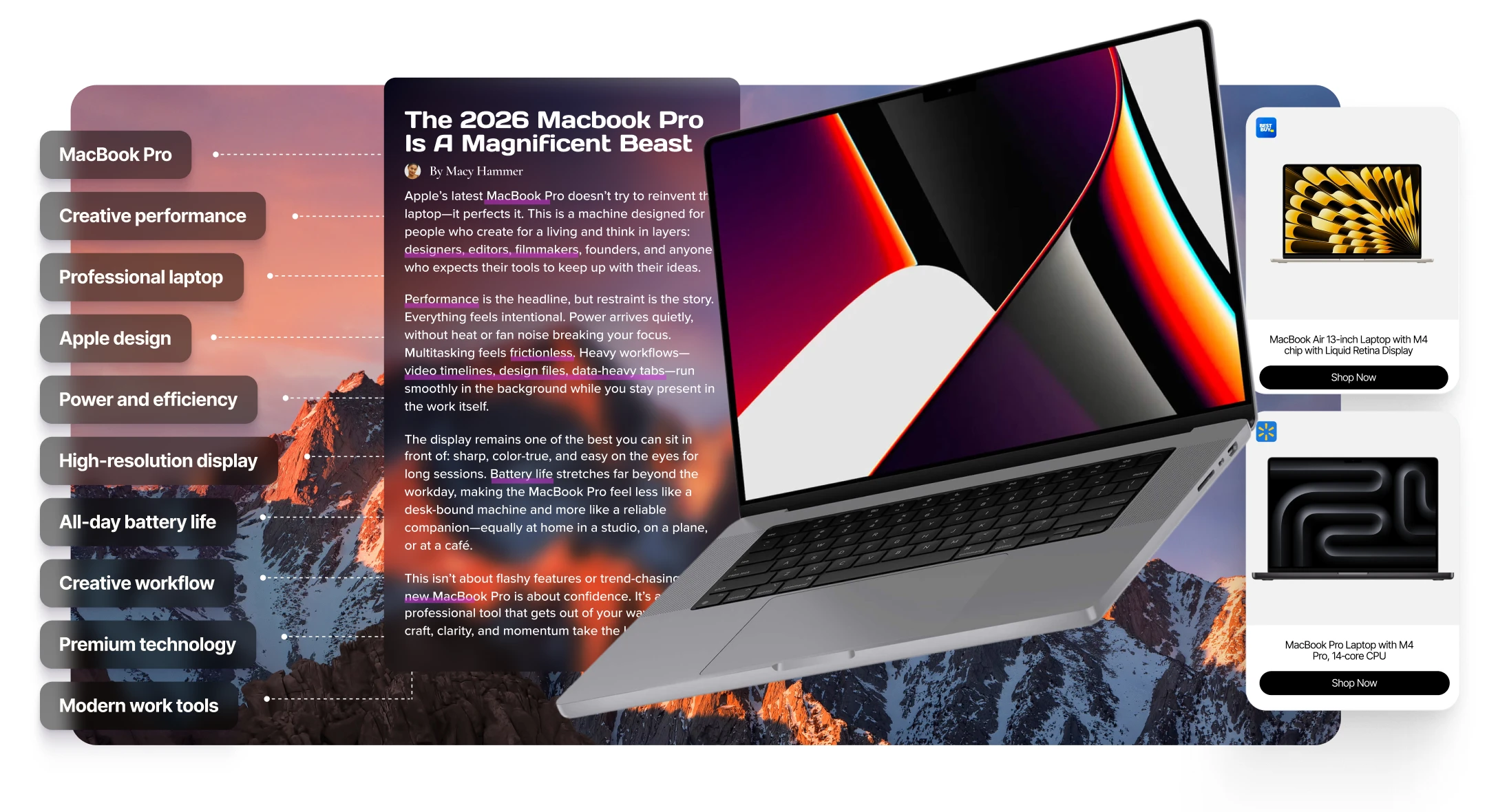
Unlike traditional display ads or end-of-article affiliate links, content to commerce is embedded directly into the user experience. But it won’t interrupt the content experience or redirect audiences elsewhere. Instead, it gives audiences the option to explore products in context at the precise moment that inspiration strikes.
At its core, content to commerce is designed to:
- Preserve storytelling
- Respect viewer choice
- Allow brands to show up naturally in context
Though certainly related, content to commerce differs from conventional retail media in important ways.
Retail media, for instance, typically activates within retailer-owned environments and focuses on capturing existing purchase intent. Content to commerce operates earlier in the journey, bringing commerce into the premium storytelling environments where interest and preference are formed.
This approach is also distinct from affiliate marketing, which relies largely on outbound links and last-click attribution. For its part, content to commerce integrates structured product data and dynamic matching at scale, thus allowing commerce to live natively within content rather than alongside it.
What’s in it for Publishers and Brands
Content to commerce solves pressing challenges for publishers and brands alike.
For publishers, the model creates a new monetization layer. Instead of increasing ad density, publishers can introduce interactive commerce experiences that align with the content itself. These units generate measurable performance while preserving the integrity of the storytelling.
For brands, content to commerce expands commerce beyond retailer-owned environments. Instead of competing only at the point of declared intent, brands can show up inside trusted content just as audiences are forming their preferences. That opens the door to incremental demand, not just conversion capture.
In these ways, content to commerce represents a new path to advertising outcomes on the open internet.
How Content to Commerce Works
At a functional level, content to commerce requires technology that can interpret content in real time and connect it to structured product data.
Most of these systems follow four steps:
- Content interpretation. AI analyzes video, imagery, text, and metadata to understand what audiences are experiencing in the moment.
- Product matching. That context is matched with relevant, in-stock products using retail feeds and identifiers such as SKUs or GTINs.
- Shoppable integration. Commerce experiences are embedded directly into the content environment, allowing audiences to explore without leaving.
- Measurement. Engagement, interaction, and other downstream signals help brands understand influence beyond last-click attribution.
Rather than waiting for declared purchase intent, this process surfaces products when interest naturally forms.
Content to Commerce in Action

How Shopsense is Leading the Way
To work at scale, content to commerce requires infrastructure that can interpret media in real time, connect it to structured product data, and activate commerce in a way that is measurable.
Shopsense has built this infrastructure for the open internet.
Our proprietary AI analyzes video, imagery, and text to understand what audiences are engaging with, then dynamically matches that context to relevant, in-stock products across retailers. This creates a commerce layer embedded directly in premium content environments, designed to drive performance while maintaining the integrity of storytelling.
Whether you’re a publisher looking to introduce incremental retail media revenue or a brand aiming to reach consumers earlier in the journey, Shopsense provides the foundation to make it possible. Connect with our team today to explore how it can work for you.
