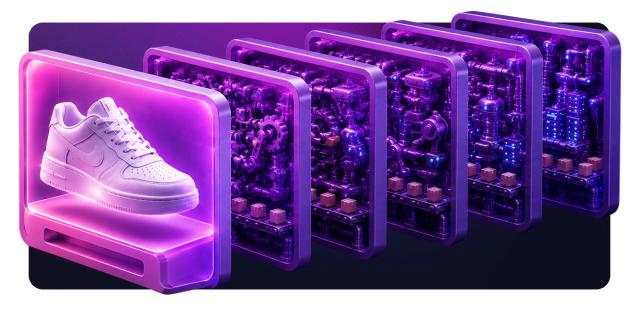
Picksy lets shoppers save and share everything they love with a wishlist. Everyday finds, dream gifts, and more all live in one place, ready to share with their favorite people. Shoppers can save links, photos, and screenshots, organize every era, wishlist, and rabbit hole, and get notified when an item finally goes on sale. Picksy is part of the People Inc. publishing family.
That simple experience depends on hard technical work behind the scenes. Every link, photo, or screenshot has to become a real, shoppable product with accurate, up-to-date price and availability. The Picksy team chose not to build visual search, product matching, and a cross-retailer catalog in-house, and partnered with Shopsense instead. Shopsense handles product detection, matching, and product detail retrieval against a catalog it maintains. That leaves Picksy’s engineers free to focus on the wishlist experience itself.
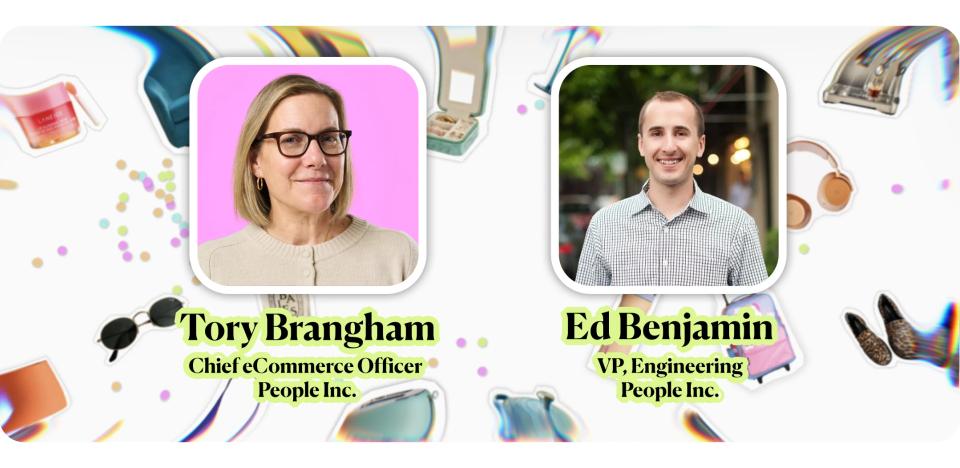
We sat down with Tory Brangham, Chief eCommerce Officer at People Inc., who leads the company’s commerce business, and Ed Benjamin, VP, Engineering, who leads the engineering behind Picksy. They told us why Picksy chose to partner instead of build, how much precision product matching really takes, and what they need from a technology partner behind a live consumer product.
Can you describe what Picksy is, who it’s for, and what shopping problem are you setting out to solve?
Tory: We all have things we want and need to buy: the boots you spotted while scrolling Instagram, the birthday gifts your daughter texted you, the jacket you saw a stranger wearing on the subway. But wanting something and being ready to buy it rarely happen at the same moment. So our wishlists end up scattered everywhere: screenshots buried in our camera roll, a mountain of open tabs, birthday lists relegated to the notes app. None of them work together, and none of them make it easier to actually get the things you want.
Picksy is the wishlist destination for everything you need to buy from every store. Send Picksy a photo or a product link and it lands on your wishlist, ready to shop. Organize wishlists across retailers, discover similar and complementary finds, and get a heads-up when items on your wishlist go on sale. And because the best wishlists are meant to be shared, you can send yours to friends and family. They can quietly claim a gift without spoiling the surprise, so you get what you actually want and no one doubles up. Whether you’re buying for yourself or someone’s buying for you, everything you love is all in one place.
What capabilities were needed to bring the Picksy experience to life?
Tory: A wishlist is only useful if adding products to it is effortless. People find things they want in very different ways. They might have a product link, a screenshot, or a photo they snapped in a store. Each of those starting points needs to become a real, shoppable product on your wishlist.
That requires accurate product identification, access to products across a wide range of retailers, and accurate, up-to-date product information like price and availability. A shopper shouldn’t have to figure out the right search terms to build their wishlists. It needs to be simple: give us what you already have and we’ll do all the work.
Can you share a specific use case that illustrates the level of product matching precision that Picksy needs?
Ed:When a shopper uploads a screenshot of an outfit but they’re really just interested in the boots in the photo, we need to anticipate their intent. That means enabling them to focus their search on the boots and not just finding boots that are the same color, but picking up details like the heel, fabric texture and color. The shopper may be interested in the exact item as well as similars, and those two things need to be distinguished. The result needs to enable the shopper to continue their shopping journey and not have to start their search over.
What role does the Shopsense catalog play in powering Picksy?
Ed: The catalog is what connects the intelligence of the matching technology to products consumers can actually buy, so that anything a shopper adds to their wishlist is a real, shoppable item with the product information needed to make it useful.
Working across retailers adds complexity. Product data is inconsistent and messy. Retailer catalogs also weren’t built to support agentic shopping use cases, so taking an out-of-the-box catalog doesn’t have the complete data set we need. Cleaning, structuring, streamlining, enriching, and maintaining catalogs so they’re easily queryable means ongoing development work.
Having access to a catalog that Shopsense maintains means our team doesn’t have to take that work on ourselves. We benefit from their product coverage and the ability to focus engineering resources elsewhere.
When someone uploads a photo or a product url, what is happening behind the scenes, and where does Shopsense sit in that flow?
Ed:At a high level, we need to turn the shopper’s input into product information that Picksy can use. With a photo, that means finding the products that the shopper is showing us. With a product URL, it means resolving that link into clean, and well-structured data about the product.
Shopsense provides the product detection, product matching, product details retrieval, and the product catalog behind those searches. Picksy takes the returned information and presents it within our experience. Shopsense supplies the product intelligence and Picksy determines how that becomes useful for our shoppers.
What has working with Shopsense enabled your team to accomplish so far?
Tory: A screenshot becomes a product on your wishlist that you, your friends and family, can track, compare, and buy, rather than something forgotten in your camera roll.
From improving user engagement to expanding the retailers available to us, the Shopsense team focused on how their platform can make Picksy a better wishlist for our customers.
How did you decide what to build internally and where to partner with Shopsense?
Tory: A wishlist for everything means we have to support everything: breadth across retailers and depth across product categories. People want things from everywhere, and the promise of Picksy is that anything you want can live on your wishlist. Shopsense brought that catalog together with the commerce models to search and match against it. Building the underlying visual search and product matching ourselves would have consumed the engineering capacity we needed for our core roadmap. Partnering with Shopsense on commerce infrastructure let our team focus on the wishlist experience itself.
What did integrating Shopsense make possible for your team?
Ed: Shopsense took one of our biggest technical risks, high-quality image and product matching, and turned it into one of our biggest assets. Getting that right is core to the Picksy experience. The experience depends on connecting what catches someone’s eye with products they can actually shop.
With that capability in place, our team can focus on building a differentiated wishlist experience, test and refine and learn how people share and engage with it.
What alternatives did you evaluate for product search and matching, and what led you to choose Shopsense?
Ed: We evaluated both general-purpose models and specialty models using a mix of product URL and image inputs representative of the use cases that Picksy supports. We were looking at whether the results would actually satisfy a shopper’s request, product matching precision, catalog breadth to support diverse shopper preferences, matching speed, production-level scale, and cost.
Shopsense has a unique mix of purpose-built commerce capabilities: their image-to-product matching, product detail retrieval, structured catalog are all things that are essential to the Picksy experience. The result needs to get the right item onto the shopper’s wishlist without forcing them to start their search over.
What do you look for in a technology platform when building a consumer-facing product?
Ed: Technical performance is essential, but how a partner works with our team matters just as much. We need clear communication, responsiveness, and visibility into changes that could affect the experience we’re delivering to our customers.
Release communication is a good example. We need to understand what’s changing, when it’s happening, and whether our team needs to do anything to prepare. Shopsense has been clear about those changes, which helps us plan and understand the implications for Picksy. That kind of communication builds confidence in a partner we’re relying on for a live consumer product.
How has Shopsense’s technology evolved since you started working together, and what has that meant for Picksy?
Ed: Shopsense’s pace of innovation is impressive. This is visible in things like their consistency in hitting their own aggressive timelines – but also in how quickly they turn feedback into tangible product improvements. As we’ve put Picksy in front of more shoppers, we’ve received feedback on what’s working and where we could be better. Shopsense takes that feedback and feeds it into improvements that support our use case.
For example, shoppers want high-precision product matching and also near-instant results. Achieving both is technically difficult but Shopsense has made this a priority and we’ve seen impressive advancements. This gives us confidence that Shopsense can keep pace with our ambitions for Picksy.
Would you recommend Shopsense to a friend?
Tory: Yes. If your business touches commerce, I’d absolutely recommend working with Shopsense. As a leader, you have a vision for what you want to build, but you also have to decide where your team spends its time. Shopsense helped us put more of our time into building Picksy, with specialized commerce models and a deep product catalog that accelerated our roadmap.
__________________________________